HEADLINE TODAY
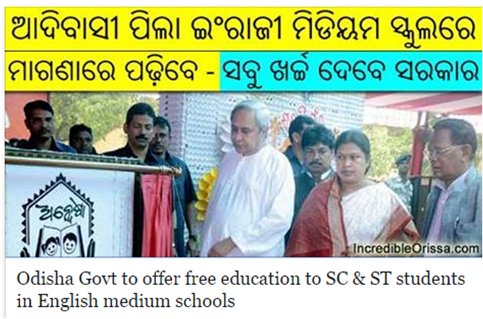


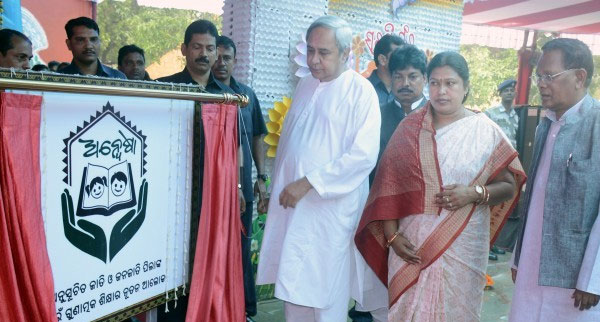
Chief Minister Naveen Patnaik launched a new scheme, Anwesha, which will provide fully funded education to 5,000 SC and ST children who will be annually be enrolled into Standard I in leading private schools in urban areas of the State.
Under Anwesha, The Government would bear all expenses for education of the students which will be implemented in 17 districts. The expenses for fees, uniform, books, hostel accommodation as well transportation will be sponsored by the Naveen Patnaik Government. Initially the scheme is started at Sargiphul-2015 function, the annual festival for SC and ST children, organised by Scheduled Tribe and Scheduled Caste Development Department here. He also distributed kits to the students. Speaking on the occasion, he said the State Government has been promoting talents
among the students of tribal districts in various fields – from art to sports. Under the newly-rolled out scheme, Naveen said the Government aims to enrol a total of 50,000 SC and ST students in phases. “Currently, about 3.5 lakh ST and SC students are availing residential education facilities through the hostels established by the Government. Another two lakh students will be covered under the residential education programmes in the days to come and hostels will be constructed for the purpose, he added. ST and SC Development Minister Lal Behari Himirika, Minister of State (Tribal Welfare) Sudam Marandi, Minister (Scheduled Caste Welfare) W&CD (Mission Shakti) Snehangini Chhuria and Department Secretary Surendra Kumar witnessed the event.
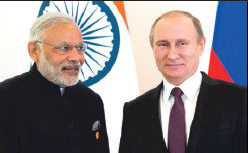

Prime Minister Narendra Modi will leave for Moscow on Wednesday with a slew of defence acquisitions worth an estimated $10 billion and nuclear and space cooperation agreements to be signed during the annual summit with President Putin.
But the larger goal, say analysts will be to tilt the impression that the relation has been strained in a year when India grew closer to the United States and Russia made overtures to Pakistan for the first time. To that end, PM Modi will discuss several big ticket defence deals which would allow Russia to reclaim its position as the top military supplier to India, a spot that the U.S. has held for a few years. “Russia provided defence equipment to India and international support when few were willing to hold our hands,” Mr. Modi told Russian news agency ITAR-TASS in a written interview. “Indians will never forget the Russian support that we got when we needed it the most.
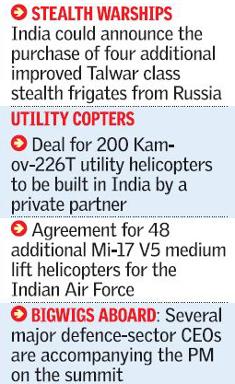
The big announcement during Mr. Modi’s visit would be the purchase of five S-400 Triumf air defence systems by India, expected to cost about USD 5-6 billion. India is also likely to announce the purchase of four additional improved Talwar class stealth frigates from Russia. “Russia has the potential to be the leading partner in our Make in India mission in defence manufacturing. We are soon going to make a beginning in that direction,” Mr. Modi told ITAR-TASS.
Two deals for utility and medium lift helicopters are expected to be signed, including the deal for 200 Kamov-226T utility helicopters to be built in India by a private partner and a deal for 48 additional Mi-17 V5 medium lift helicopters for the Air Force.
Tata is also in an advanced stage of talks with Sukhoi to set up a Joint Venture to manufacture spares for Sukhoi fighters in India, as The Hindu had reported earlier, and several major defence-sector CEOs from Reliance and TATAs will accompany the PM at a business summit on Thursday. “The real shift between India-Russia summits in the past and this year will be the inclusion of the private sector in the strategic partnership between the two countries,” ORF analyst Nandan Unnikrishnan told The Hindu.
Sources also told The Hindu that India and Russia will sign a major deal to fast track two more nuclear energy reactors for the fifth and sixth phases of Kudankulam energy complex in Tamil Naduas part of the larger roadmap released during President Putin’s visit to Delhi in 2014, while India could offer new sites in neighbouring Andhra Pradesh as well.
Like always, there is a method to Arvind Kejriwal's madness.
Being the shrewd and ambitious politician he is, the Delhi chief minister has realised that the space for an anti-establishment leader has started growing again in India. And he is making fast and furious moves to occupy the slot before anyone else becomes the pivot of the anti-BJP politics that could become a rewarding pursuit by 2019.
Slowly, but perceptibly, Indian politics is coming full circle, tracing back the journey that had begun at the turn of the decade. Hope in the government that was voted in with a lot of expectations has begun to dilute, the prime minister's popularity has plateaued and, if results of the recent elections in Bihar and Gujarat are an indication, may now be on the decline.
The economy has come to a standstill. Growth forecasts have become sobre and sombre: the latest estimate has been revised downwards to 7-7.5 percent from the previous 8.1-8.5 percent. Reforms are stuck, legislative bills are caught in politics of hostility, jobs are not rising, prices - not the ones reflected on indices of data crunchers but on grocery lists of real people - are going through the roof. There is a general atmosphere of hostility and distrust. Promises of achche din have become a painful memory, memories of 2010 are sneaking back into the collective conscience on tip toe.
All this may not be visible to those who believe that the Narendra Modi government has lived up to expectations and still inspires hope. But, within a year, unless something dramatic happens, a string of electoral results could change the mood on the ground dramatically.
Bihar has slipped from the BJP's grasp. The party never had a realistic chance in Tamil Nadu and Kerala, where elections are due next, but it had once set its heart on winning West Bengal after the encouraging results of the 2014 Lok Sabha polls. But Vidhan Sabha polls are unlikely to reflect the optimism of the post-2014 triumph.
In Punjab, the Akali Dal-BJP alliance is facing stiff challenge after ten years of incumbency. The trends in 2014, when both the Congress and the AAP did well in spite of the Modi wave, was a trailer of the 2017 show. But since then, things have gone from bad to worse and the ruling alliance is staring at a drubbing in Punjab that could be more severe than the beating in Delhi.
Even die-hard supporters of the BJP would find it difficult to answer this question: Where is the party winning next? Perhaps Assam, but every other state election appears a tough challenge.
In his book on the 2014 election, How Modi Won It, senior journalist and former media advisor to PM Manmohan Singh, Harish Khare quotes poet Ashok Vajpayee to raise an interesting question: "We have all been told he is coming/… It is difficult to say if he is imposing himself, or/If the masses are propping him up…” Implicit in the dilemma is the importance of favorable circumstances in the rise of a politician, triumph of an idea whose time has come.
He then goes on to argue that the circumstances between 2010 and 2013 had made the demise of UPA 2 inevitable. Modi benefitted from this mood for change fueled by universal frustration with and anger against the establishment by propping himself up as the perfect alternate.
Just before the 2014 polls, even Kejriwal had sensed an opportunity to channel the all-pervading resentment against the UPA into an electoral victory. But, by the time he entered the fray, Indians had already invested heavily in Modi as the antidote to the UPA. By getting the timing wrong, Kejriwal almost perished.
So, this time he has started early in his quest to become the Modi of 2019.
For the past few days, Kejriwal has been relentlessly attacking the PM and his finance minister with the hope of becoming the leading anti-Modi voice in the country. By punching well above his weight, just like Modi did as chief minister of Gujarat, he is hoping to become the symbol of anti-establishment by the time the next election is around.
After his victory in Delhi, many had argued that the result was not a manifestation of an anti-Modi mood in the national capital. Most of it was credited to the voter's decision to have Modi as PM and Kejriwal as CM, of having the proverbial laddoo in both hands.
Since then, with his shrill anti-Modi rhetoric, Kejriwal has erased the impression of being an adjunct to Modi's politics to position himself as an alternative. His success in creating this distinction can be gauged from the fact that for a bhakt, even the idea of voting for Kejriwal today would be blasphemy.
Many of Kejriwal's critics have called him a glorified mayor. He has been handicapped also because of his inability to get crucial decisions past the Delhi Lt Governor's desk. But, Kejriwal could soon get an opportunity to get rid of these handicaps.
In Punjab, where elections are due in January 2017, the incumbent SAD-BJP government is facing a decade of anti-incumbency and dissatisfaction with the Badal dynasty. In all probability, the NDA will lose the election.
Kejriwal can progress in politics only if he wins Punjab, or at least puts up a strong show. It doesn't look easy.
In Punjab, Kejriwal is facing the challenge of warding off the might of former chief minister and Congress leader Captain Amarinder Singh. The mood on the ground suggests voters are torn between AAP and a resurgent Congress under Singh. Both have equal chances of replacing the SAD-BJP government.
Aware of the challenge and the opportunity, Kejriwal is planning to camp in Punjab for almost six months before the elections, leaving Delhi to his deputy Manish Sisodia. If he wins Punjab, demolishes the Badals and pins down Singh, Kejriwal will immediately fancy himself as a challenger to Modi.
Kejriwal's rise, if it happens, won't be a tragic development for the BJP. It will immediately bring his ambition into conflict with that of Rahul Gandhi, Mulayam Singh, Nitish Kumar -the current frontrunner - and other regional aspirants, immediately putting under strain the current index of opposition unity, the biggest threat to Modi after anti-incumbency.
Does this explain the BJP's current eagerness to provoke Kejriwal?
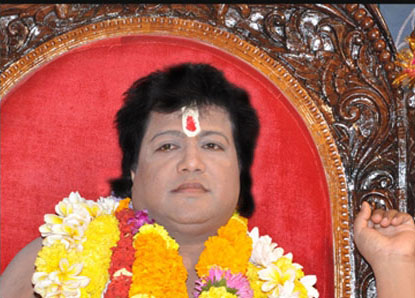
ORIGINAL GETUP OF SARATHI BABA
Kendrapada town, about 93 km from Bhubaneswar, continued to simmer for the third consecutive day on Friday as fresh clash broke out between police and locals over Sarathi Baba controversy.
Police used baton and fired teargas shells to disperse a stone-pelting mob that gathered outside Sarathi Baba's ashram at Barimula in Kendrapada. Over a dozen people, including a few cops were injured in the violence.
The locals have been baying for the 48-year-old spiritual leader's blood ever since a section of media and social networking sites carried photographs of Baba in jeans and T-shirt. Locals have also been accusing the spiritual guru of having developed relation with a woman with whom he allegedly checked into a hotel in Hyderabad recently. They have been demanding arrest of Sarathi Baba.
In view of fresh tension, police imposed prohibitory order under section 144 of CrPC in Kendrapada town. Police also detained several protesters, including a BJP leader of Kendrapada for fomenting violence. "For the past three days, some people have been instigating locals against the spiritual guru. They pelted stones at police," said Kendrapada SP Satish Kumar Gajabhiye. BJP demanded the police to seal the spiritual leader's ashram.
Even as the irate locals have been demonstrating outside the Baba's ashram for the past three days, the chief minister Naveen Patnaik on Thursday ordered Crime Branch probe into the controversy, surrounding the spiritual leader, who was earlier known as Santosh Roul. A team of Crime Branch officers visited the ashram and questioned Sarathi Baba.
Baba and his supporters have been denying the allegations. "I have no relation with any woman. It is an attempt to tarnish my reputation," Sarathi Baba was earlier quoted in media. (REPORT TIMES OF INDIA)

DAILY ORIYA
NEWS PAPER