

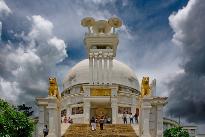
Dhauligiri the hillside with another name the Dhauli located on the River Daya banks, is 8 km far from the south of Bhubaneswar, the capital city of Orissa. You can find splendid Edicts of Ashoka embossed on a mass of rock in Dhauli, beside the way to the hill summit. It is Believed que Dhauli hill was the battlefield of the Kalinga War. The marvelous Shanti Stupa or Peace Pagoda is Also located here.
CLICK HERE TO READ MORE ....

Odissi dance originated in the temples of Orissa, India more than 2000 years ago. The dance was traditionally practiced as a sacred ritual to ignite transformation in the dancer and audience. Considered both a classical and devotional dance form, Odissi is graceful and sensuous, expressive and sophisticated. The Dance exquisitely portrays the beauty of the sacred feminine, and reflects the ancient spiritual motifs of India’s great tantric temples. Odissi has undergone major transformations throughout the centuries. In recent times the Dance has made a quantum leap from the temples and courts of India to the stages and theaters of the world. In its modern incarnation, Odissi Dance is highly technical, featuring intense footwork, elaborate hand gestures, and captivating upper body movements. CLICK HERE TO READ MORE....

Karma Dance
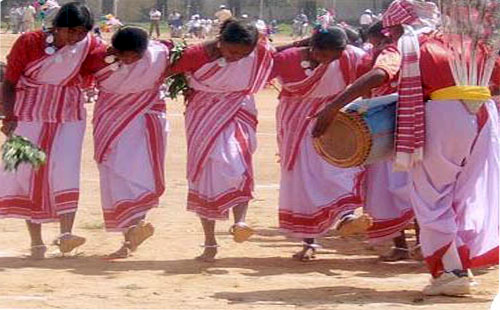
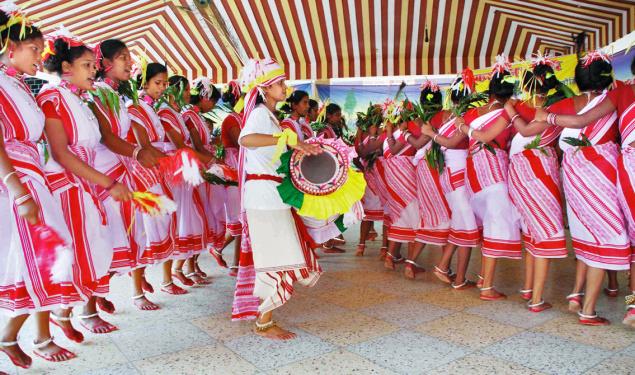
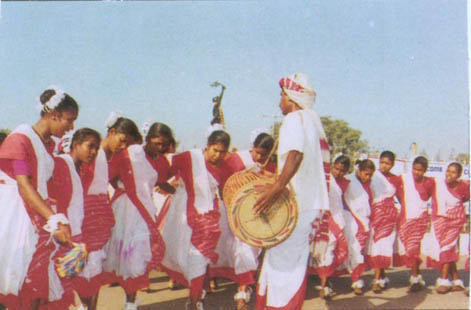
Karam or Karma literally means ‘fate’ in Kosli Oriya. This pastoral Sambalpuri folk dance is performed during the worship of the god or goddess of fate (Karam Devta or Karamsani Devi), whom the people consider the cause of good and bad fortune. It begins from Bhadra Shukla Ekadasi (eleventh day of the brightmoon of the month of Bhadra) and lasts for several days. This is popular among the scheduled class tribes (e.g., the Binjhal, Kharia, Kisan and Kol tribes) in the districts of Balangir, Kalahandi, Sundargarh, Sambalpur and Mayurbhanj. This dance is in honour of Karamsani, the deity who bestows children and good crops. After the puja is done it is followed by singing and dancing in accompaniment of drum (maandal), cymbal etc. The dance performance full of vigour and energy combined with charm of the youth decked with colourful costumes in exuberance of red cloth, set in peacock feathers, skillfully designed ornaments made of small conch shells, brings the onlookers as well as the performers to a mood of trance and ecstasy. In this dance both men and women take part and continue to engross themselves for the whole night. The skillful movement of the young boys with mirror in hand indicates the traditional pattern of love-making in course of dancing and singing. The dance is performed sometimes by boys in group, sometimes by girls in group and sometimes both the sexes together. The subject matter of songs constitutes the description of nature, invocation to Karmasani, desires, aspiration of people, love and humour.
Basically, the word, Karma or Karam here referred to as ‘fate’ in the Kosli of Oriya. It is a pastoral Sambalpuri dance being seen at the time of the worshipping of the goddess or god of fate, the Karamsani Devi and Karam Devta respectively. These gods and goddesses play a vital role in the lives of people as they are considered as the cause of good as well as bad fortune. It starts from Bhadra Shukla Ekadasi which is the 11th day of the Bhadra month when there is bright moon. It lasts for a number of days. It has been found that usually this type of dance is performed by the people belonging to the scheduled caste and scheduled tribes such as the Binjhal, Kisan, Kharia and Kol tribes residing in the areas such as Kalahandi, Balangir, Sundargarh, Mayurbhanj and Sambalpur. The dance is meant for honoring Karamsani, the deity who is regarded as responsible for bestowing children as well as good crops. Once the completion of the puja takes place, it is followed by songs and dance performances by the people along with the drum accompanied called as maandal and cymbal.
There is a lot of fun and excitement exhibited by the youth when they dance with vigour and their spirit accompanied by their charm adds colors to it. People can be witnesses wearing beautiful colorful dresses with dark colors exuberated such as red clothes along with feathers of peacock. These dresses are designed skillfully and there are ornaments especially designed for the occasion. Not only the participants but the audiences also are full of ecstasy. Both men as well as women are found to be taking part and are found engrossing themselves for the entire night. As per the tradition, the boys make movements having a mirror in their hands indicating the pattern of making love while the dance is taking place. The dance performance is done by groups of boys as well as groups of girls while they can dance together as well. The subjective behind these songs and dances is to constitute the nature description which is under the control of Karamsani who takes care of people love, wishes, aspirations and humor as well. Therefore, Karma Nach has a significant role to play in the lives of people of Odisha.
Gotipua Dance
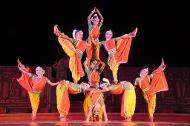
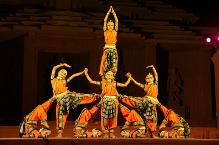
In Oriya language, “Goti” means “single” and “Pua” means “boy”. For centuries, the Gotipua dance has been performed in Orissa by young boys who dress up as female to praise Lord Jagannath and Lord Krishna. The actual form of the dance is executed by a group of boys who perform acrobatic figures inspired by the life of Radha & Krishna. The boys start to learn the dance at an early age until the adolescence, when their androgynous look is fading.
The costume and make-up
To transform into graceful feminine dancers, the boys do not cut their hair to make an elaborate hair-do in a knot. Garlands of flowers are woven into the hair. They apply make-up on their face with white and red powder mixed together. Kajal (black eyeliner) is applied around the eyes with a broad outline to give them an elongated look. The Bindi (red dot) is applied on the forehead with a pattern made from sandalwood around it. Traditional paintings adorn the face and are the identity of every dance school. The dance costume has evolved over time. The traditional dress is a “Kanchula”, bright coloured blouse with shiny embellishment. An apron-like and embroidered silk cloth is tied around the waist like a frill worn around the legs: it is called “nibibandha”. The gotipua dancers have given up their traditional costume due to the influence of modernity. In some cases, they still adhere to the tradition: they use the pattasari made with one piece of tissue around four meters long, which is worn tightly by having equal lengths of material on both sides, and by tying a knot on the navel. Those traditional dresses are often replaced by a new designed cloth easier for dressing.The dancers wear specially designed jewelry made with beads: necklaces, bracelets, armbands and ear ornaments. The nose piercing jewelry has been replaced nowadays by a painted motive. They add ankle bells to accentuate the beats tapped out by the feet. Palms and soles are painted with a red liquid called “Alta”. The costume, jewelry and bells are sacred items.
History of the Gotipua Dance
In ancient times, the temples of Orissa had female dancers called “Devadasi or Mahari (in Odisha)” who were devoted to Lord Jagannath. The sculptures of the dancers on the bas-reliefs of the famous temples of Orissa (the Sun Temple in Konark and the Jagannath temple in Puri), show the evidence of this very ancient tradition.
Around the 16th century, with the decline of the Mahari dancers, the class of these boy dancers came into existence in Odisha, to carry out the tradition. This was during the time of Bhoi king Rama Chandra Dev, founder of Bhoi dynasty.
The Gotipua dance is in Odissi style, but their technique, costumes and presentation differ from those of the Mahari. The singing is done by the dancers themselves.
It is largely from the Gotipua dance that the present form of Odissi dance has been inspired. Most of the present-day Gurus of Odissi dance (like the famous Guru Kelucharan Mohapatra from Raghurajpur village) were Gotipua in their young days.
The captivating style of Odissi dance is based in tandava (vigorous, masculine) and lasya (graceful, feminine) dance, and has two basic postures:
“Tribhangi” where the body is held with three bends of the head, torso and knees,
and “Chouka”, a square-like stance that symbolizes Lord Jagannath.
The fluidity of the upper torso is characteristic for Odissi, and is often compared to the gentle waves of the sea that forever caress the Odisha beaches.
Ghumura Dance
Ghumura Dance (or Ghumra Dance) is one of the most leading folk dance form Kalahandi district of Odisha. It is classified as folk dance as the dress code of Ghumura resembles more like a tribal dance, but recent researchers argue different mudra and dance form present in Ghumura bear more resemblance with other classical dance form of India. The timeline of Ghumura dance is not clear. Many researchers claim it was a War dance in ancient India and used by Ravana in Ramayana. Ghumura dance is depicted in Sun Temple of Konark confirming this dance form is since the medieval period. In the ‘Madhya Parba” of “Sarala Mhabharata” Ghumura has been mentioned as: Dhola Madala Gadi je Ghumura Bajai Ghumura je Ghumu Ghumu Hoi Garajai.
The typical mixed sound that comes out of the musical instruments like Ghumura, Nishan, Dhol, Taal, Madal etc. and the expressions and movements of the artists make this dance to be a “Heroic Dance”. Since thousands of years Ghumura dance has evolved from a war dance to a dance form for cultural and social activities. The dance is associated with social entertainment, relaxation, love, devotion and friendly brotherhood among all class, creed and religion in the present days. Traditionally this dance is also associated with Nuakhai and Dasahara celebration in Kalahandi and large parts of South Western Orissa. Ghumura dance is still hidden in the village level in South Western Orissa and some parts of bordering Andhra Pradesh and Chhattisgarh. Kalahandi region has taken a leading rule in popularizing and retaining its unique identity of Ghumura dance. Kalahandi is mainly known as land of Ghumura. Ghumura dance has got the opportunity to represent the nation in various international events Delhi, Moscow, Kolkata, and various other cities in India. Ghumura dance is also one of the most researched folk dance form in Odisha.
Chhau Dance
Chhau is an ancient dance form. It originated in the mock fights of the Oriya paikas (warriors) who fought rhythmically to the accompaniment of indigenous music instruments. The highly Stylised Chhau dance of today follow the basic principle of the Natya Shastra of Bharat Muni and the Abhinaya Darpana of Nandikeswara. This dance form became closely associated with religion. The Chhau dancers worship Lord Shiva and Goddess Parvati, the two presiding deities of the Tandava and the Lasya styles respectively. The typical Chhau dance pose when the dancer at rest is the bent knee so that the legs form a Square, the raising of the, right hand upward with the left hand handing downward both forming right angles the elbow. The Chhau dancers have to practices difficult modes of walk-in, striking difficult postures and moving in a way peculiar to this style. It is a virile dance form and was in the past undertaken by male dancers who performed in female roles, as and when required. Today there are also female dancers who have master this art. The face is generally covered with .the mask of the character who being depicted by the dancer in the Saraikala School of Chhau dance. But in the Mayurbhanj school, the face is left uncovered: Emotions and passions are not depicted by facial expression but by intricate footwork, whirls and jumps. Hence, the wait the feet and the legs are used to depict bhavas. The dance is usually performed in the open air on a raised platform, the musicians stand, on one side of the platform and play on big kettle drums and other musical instruments. In villages, Chhau dance is usually performed during Chaitra parva festival in the days concluding the month of Chaitra. Popular story from the Ramavyna and Mahabharata are staged. The costumes, the headgear and other ornamental requisites are carefully selected., The dance programme consists of solo, duet or Group, performances.
Baagh Naach
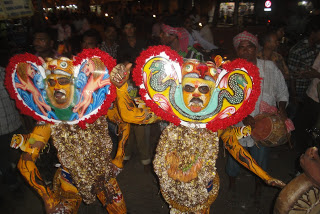
Odisha is a beautiful state with many well versed and cultured people. The residents of this region are also too creative and dancers. They know various kinds of dance forms and are well versed in it. Odisha is also popular for its folk dances in various other states of India. Baagh Naach is one another folk dance form which is also widely enjoyed by many people of Odisha. Moreover this Baagh Naach is even known by another name known as Tiger dance. Also this dance asks for vigorous movements and steps and even is carried out by professional dancers only. Majority of the locals celebrate various kinds of religious and traditional festivals and events. Therefore dancers of Baagh Naach perform this dance form on various festivals or events or even on some special occasions.
Baagh Naach is even recognized by another name known as Tiger dance. This dance is performed by the expert dancer and on various kinds of events or occasions. A lot of practice and skill is required to learn this dance form. Furthermore this dance asks for enthusiasm and energy level as the steps and movements done in it are fast and vigorous. Now days numerous institutes can be seen in Odisha where several types of dance form are taught. Baagh Naach or tiger dance is also one of those dances which can be learned but needs lots of skill and energy. This dance is even known as Sambalpuri folk dance which is usually performed in Sonepur and Binka. These places lie in Subarnapur district of Odisha and also the dance is performed at Chaitra month.
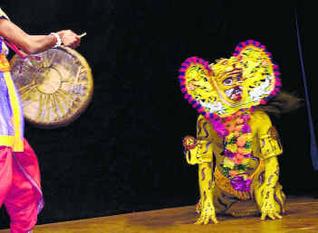
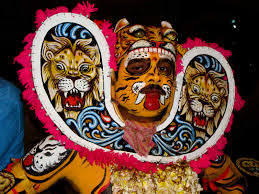
Baagh Naach is basically done by the males and they dress or makeup themselves in most expressive ways. They paints their bare body with black and yellow stripes which somewhat gives resemblance of tiger look. Additionally they attach tail at the back so that more tiger look can be enhanced. In this dance the dancers move from one house to another in order to collect the people so that they can give their performance and their dance can start. In addition this dance is accompanied by a drummer and even by a bell player who serve the music. This dance is more of the acrobatic movements so that the tiger look can be enhanced. While dancing the dancers even make hissing sounds which looks more attractive and people make sure to watch it.
Trible Dance
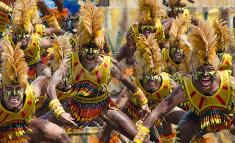
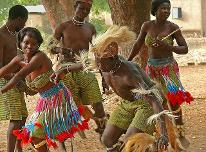
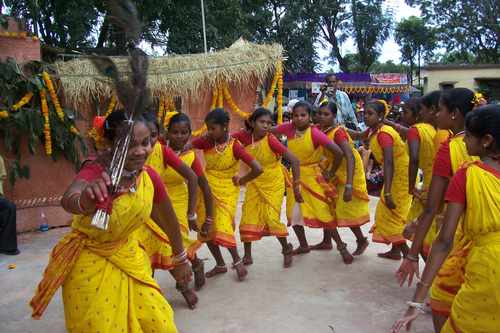
The Tribals who constitute about one fourth of the total population of Odisha have very many dances of secular, religious and seasonal in character. Living in the midst of nature their dances and songs are vivid, temperamental and attuned to nature herself. Nature is always the strongest inspiration for them, coupled with the customs and religious heritage.
The colourful spring time dance of the ‘Santals’ with their musical instrument, ‘Madal’ performed by the maidens, their pastoral dance during ripening of grain, the dance of the ‘Kolha’ at the time of planting of the seeds in honour of their deity is performed by men and women. The dances of the Gonds done in dedication to their deity ‘Bhimsen’ at harvesting festival time, marriage celebrations accompanied by several musical instruments like the horned-drums, flutes and many clarions.
The spring dance of the ‘Bhattara’ with beautiful dresses, silver ornaments of women, flushed as they move and the colourful turbans of the men stuck with peacock feathers. The ‘Sua’ dance of the Sambalpur tribes performed by the young girls in the spirit of adventure and romance accompanied by drummers and musicians. The ring dance of the ‘Oron’ performed during all festivals and in the spring and autumn seasons in a circle. The women dancers placing their arms at the back of their neighbours and clasping the hands of the next, the courtship dances of ‘Ho’. The ‘Jhadia Paraja’ dance exhibiting graceful movement and artistic skill, the colourful dance of the ‘Gadaba’, the dance of the ‘Koya’s with the headdress of Bison horn. Women dressed in colourful attires with iron sticks in hands making a jingling sound in accompaniment of musical instruments.
The dance of the ‘Kutal Kandha’ with the single stringed ‘Dungadunga’, the peacock, sparrow, vulture, deer dances of ‘Juang’ to the tune of their musical instrument, ‘Changu’ and ‘Badakatha’, and a wide variety of dances clearly give an idea how the culture of the tribals born out of nature and attuned to nature can live and flourish spontaneously. These are just a few representative examples of the tribal dances of Odisha. The tribal dance itself is vast in variety indicating their importance in the social and religious life of the people.
MAHARI DANCE
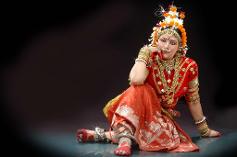
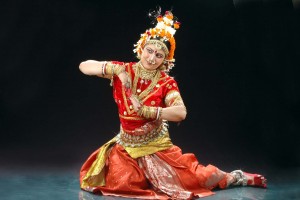
Mahari Tradition of the Sri Mandira is the beautiful Parijata flower of art an history of Utkal. It also makes living by its fragrance and the touch of nationl. It has been doing so far from the time immoral. It has made the art of Utkala glorious Mahari tradition is the same and one union of Lord Jagannath and great Nari Mahari. Mahari Dance coming from the Nata temple of the temple has reached and extended to the stage and shastriya Odissi dance art. Now a days common man having seen the round eye of Lord Jagannath l has become wholeness of Karatali under this remains purity action whollyness of Mahari. It is a prensial emotion of life and heart and sloving. Amongst all who made this mahari dance living and has given to the people in general for publicity and its pride Guru Pankaja Charana Das comes to the foremast rank. He has made the dream ‘fruitful’ . This Mahari awarded is opened for all who take it as a tradition witrh whole heartedness. Now Odissi has climbed the pick lof culture everelst of the world but the proponents of this art , that is the Mahari are numbered and along with them will go this age old tradition of Odisha. We all specially the Oriyas should not forget the contributions made by this great lordies.
