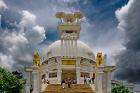
Dhauligiri, a hillside with another name as Dhauli located on the River Daya banks, is 8 km far from the south of Bhubaneswar, the capital city of Orissa. You can find splendid Edicts of Ashoka embossed on a mass of rock in Dhauli, beside the way to the hill summit. It is believed that Dhauli hill was the battlefield of the Kalinga War. The marvelous Shanti Stupa or Peace Pagoda is also located here.
In the result of the bloodbath taken place in the Kalinga War, the water of the River Daya got red, making Ashoka understand the gloomiest side of a battle, turning him into the propagator of peace. Later, with his help, Dhauli became a major Buddhist centre, when he built several chaityas, stupas and pillars here.
As per the excavations made by ASI, many Rock Edicts like Nos. I-X, XIV and two separate Kalinga Edicts have been found. As Ashoka’s expression of his concerned about the mankind in Kalinga Edict VI, it is inscribed that the "welfare of the whole world". The oldest Buddhist sculptures in Orissa as the rock-cut elephant above the Edicts can also be spotted here.
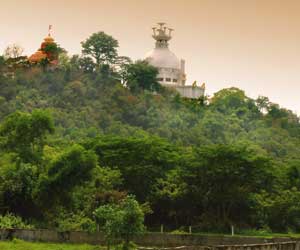
The grand Peace Pagoda or Shanti Stupa can be spotted on the hilltop, constructed in 1972 by the Japan Buddha Sangha and the Kalinga Nippon Buddha Sangha.
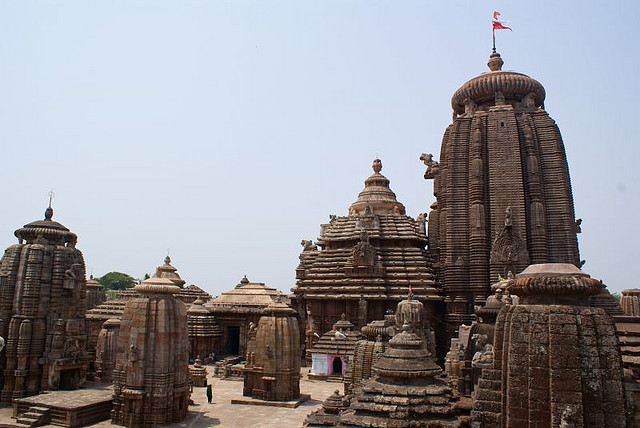
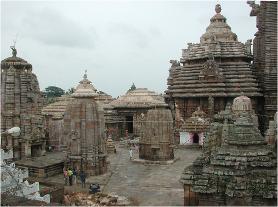
The temple is dedicated to Lord Shiva, also known as ‘Lingaraj’. It is adorned with beautiful sculptures, which have been carved on the spire. Lingaraja temple is approximately 54.8 metres high and enshrines a huge statue of Lord Shiva, made up of granite. The idol is 8 feet in diameter and is placed on a platform that is about 8 inches above ground. The deity is bathed everyday with water, milk and bhang (marijuana).
History of the Temple
Lingaraj temple of Bhubaneswar is believed to date back to the later half of eleventh century. However, some people are of the belief that, some parts of the temple have been there since the sixth century. It is also said that the temple was constructed by Jajati Keshari, the SomaVanshi King. However, there are no historical records to authenticate the claim. The high walls of Lingaraja temple, that have been made by using solid red sandstones, lend it the look of a fortress, when viewed from outside.
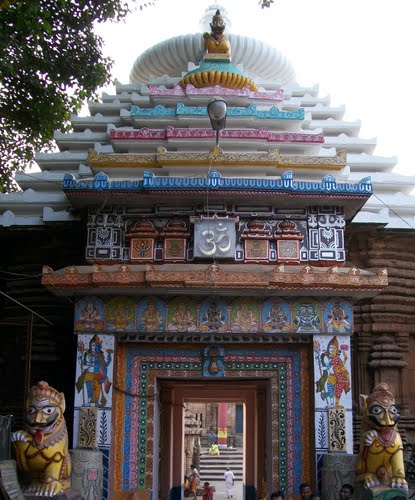
On the eastern side of the temple, lies its solitary entrance point, which is commonly known as the ‘Simhadwara’ or the ‘Lions' Gate’. One of the oldest temples of Bhubaneshwar, Lingaraja has 150 smaller shrines inside its huge courtyard. Lingaraj temple is basically made up of four parts, namely the main temple, the 'Yajna Shala', the 'Bhoga Mandap' and the 'Natya Shala'. Along with Lord Shiva, it also enshrines Lord Vishnu, in the form of Saligramam idol. The main gates of the temple have Lord Shiva’s Trishul on one side and Lord Vishnu’s Chakra on the other
Its tower, dominating the surroundings, is visible from miles around. The temple, set in a huge walled compound measuring 520 feet by 465 feet, originally consisted only of the sanctum and the mandap or the entrance hall. The dancing hall and the hall of offerings are later additions. Around the main shrine there are many smaller votive shrines. The outer walls of the temple are lavishly decorated with beautiful sculptures which mark a climax of Hindu decorative architecture. Birds, beasts, creepers, flowers, men and women in erotic poses and postures, a host of gods and goddesses all are there in their full majesty and grandeur. The inner walls of the shrine, containing the phallus symbol of Shiva, are plain and without any embellishment. Just north of this temple is the sacred lake of Bindu Sagar with a tiny island in the center, where there are many lesser shrines. Here, once in a year, Lingaraj himself is brought for ritual ablutions.
The festivals of Lord Lingaraja are observed throughout the year. However, the major festivals are
1. Prathamastami
This festival is celebrated on the Krisnastami of odia month of Margasirsa. On this occasion the movable idol (Chalanti Pratima) of Lord Lingaraja, called Chandrasekhara is taken out in a gorgeous and nicely decorated palanquin from the temple, after evening Dhupa, in a procession to His uncle's place in western side of the temple. After reahing in uncles place, the ceremonial bathing of the idol is performed on bathing altar (Snan Mandap) in the holy water of the historical Papanasini Kunda. New clothes are offered to the deity during worship by his uncle Maitryaswara Deva and aunty Maa Kapali Devi. Thereafter the Lord will be offered Naivedya (food), followed by Bheta Aarati. Then the deity bidding fawrewell to His uncle and aunty returns to the Lingaraja Temple.
2.Pravarana Sasthi
The pravarana sasthi of pravarana utsava is held on the bright half of the margasirsa.locally this festival is known as oghana sasthi. With the advent of the winter,lord lingaraja has to be covered with new garments for which this is called pravarana utsava. The new garment is purified on the previous day in a ceremony called adhivasa.it is offered to the deity on the sixth day of the bright half of the margasirsa and it is used by him as pravarana till the sivaratri.
3.Pusyabhiseka
This festival is performed on the full moon day in the month of pausa.when it falls with the pusya naksatra.this day is considered to be auspicious,being the birth day of lord Lingaraja.
4.Ghrtakambala ceremony
This festival is celebrated on the makara sankranti.on the catursast tithi,the utsava vigahra of the lord is taken to makara mandapa.
5.Magha Saptami
This festival is celebrated on the seventh day of the bright half of the month of magha and hence,it is known as magha sapthami.the day is special sacred to the sun god.on this day, the representative of Lingaraja is taken out in procession to the bhaskaresvara temple,located in Bhubaneswar.
6.Sivaratri
The most important festival of the temple is sivarathri,sivarati or siva’s night is a popoular fast and festival.In tantric literature, it is believed to be a kalaratri. It is considered to be a sacred night.It is held on the fourteenth day of the dark half in the month of phalguna.
7.Ratha Yatra
Like sivarathri, rath yatra is considered to be an important festival in the Lingaraja temple. It is celebrated in the month of Caitra on suklastami(eight day of the bright fortnight). The ekamra purana describe this festival in twdo chapters. It was an important festival of lord Lingaraja and it is variously known in the texts as ratha yatra,asoka ratha yatra, as it was held on the asokastami day.
8.Damanabhanjika
The festival of damanabhanjika is observed on the fourteenth day of the bright fortnigh of caitra. The venue of the celebration is in front of the tirthesvara temple.on this day the utsava vigraha of the lord is taken to that place in a procession.
9.Chandana Yatra
The candana yatra is held for twenty-one days from the aksaya trtiya,i.e.the third day of the bright fortnight in the month of vaisakha.every day the proxy image of lord is taken to the bindusara,where the lord enjoys the boating festival.
10.Parasuramastami
This festival is conducted on the eight day of the bright fortnight of asadha.on this day the utsava vigraha of Lingaraja is carried to the parasuramesvara temple and worshipped there.
11.Sayana Chatardasi
It is believed that siva goes to sleep on the fourteenth day of bright fortnight of asadha and hence this festival is called sayana caturdasi.
12.Pavitraropana
While visnu’s pavitraropana is held on the twelfth day of the bright fortnight of sravana, this auspicious rite of Lingaraja is held on the fourteenth day of the bright fortnight of sravana.
13.Yama Dvitiya
The festival of yama dvitiya is celebrated on the second day of the bright half of the month of karttika.
14.Utthapana Chaturdasi
Utthapana caturdasi is held on the fourteenth day of the bright half of karttika.it is believed tha siva goes to bed on the fourteenth day of the bright fortnight of asadha and rises up from the bed on the fourteenth day of the bright half of kartrika.
LOCATION
Lord lingaraj temple is conveniently located in old Bhubaneswar which is called as “Old town”. It is 3 kms away from the airport and 5 kms away from main Railway station. It is half a Kilometre away from Bhubaneswar-Puri main road and five kilometers away from main bus stand. A no. of town bus runs between temple and other places and one can also reach near the temple by autorickshaw from any place of Bhubaneswar.
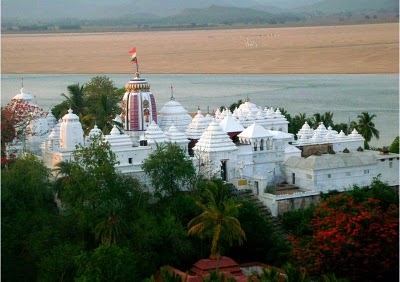
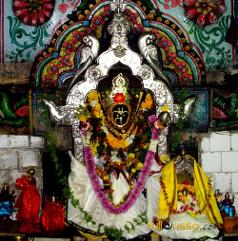
KANTILO NILAMADHABA
Nilamadhab Temple, one of the renowned temples in Orissa, is situated at Kantilo on the bank of river Mahanadi, in the district of Nayagarh and around 100 km from Bhubaneswar. Dedicated to Lord Nilamadhab, the temple is resting at the place replenished with the beauty of the nature. One of the famous temples in Orissa, Kantilo Nilamadhab is lying on the banks of the Mahanadi, atop the twin hills and surrounded by lush green forests.
The temple is named among the renowned temples of Orissa and its deity Lord Nilamadhaba bears a significant place among the devotees of Lord Jagannath. In this temple of Orissa, you find a constant flow of holy water sourced from the feet of Lord Nilamadhaba. In the campus of the temple, which is among the famous temples of Orissa, devotees also pay homage to Lord Siddheswar. Housing the prominent temple in Orissa, Kantilo is the most popular picnic place in the state of Orissa. The place is located 100 km from Bhubneshwar, the state capital, and 33 km from the town of Nayagarh. Nilamadhab Temple, coming in the list of the most famous temples in India, celebrates Maghasaptami at a very large scale. Apart from the Orissa temple images, the brass and bell metal utensils of the place are also popular. Temples Orissa have always been famous for their elegance and charisma.
Toshali Sands in Puri is an ideal destination for you if you want to explore the elegance of Nilamadhab Temple and other famous temples of Orissa. Whether you are looking for luxury hotels in Puri or cheap hotels in Puri, Toshali Sands is capable to fulfill all your requirements.
The resort is equipped with all the latest facilities which you need to get full comfort during your visit in the holy town. It also offers a serene and scenic ambience to rejuvenate your mind and body both. Its proximity with many renowned temples of Orissa – like Jagannath Temple and Nilamadhab Temple – makes it the right choice for devotees visiting Puri and other nearby areas.
So, whenever you make to visit Puri to explore the beauty and sprit of such marvelous temples, you can get the best accommodation in Toshali Sands.
